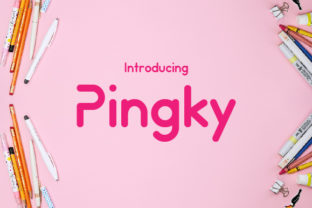
Pinky: A Fun Sans Serif Font
As a web designer, I'm always on the lookout for fonts that bring personality to a site without sacrificing readability. Pinky, a sans serif typeface, caught my eye during a recent project where I was redesigning a boutique online store's homepage. Its playful yet professional vibe made it a perfect fit for the brand’s modern aesthetic.
Testing Pinky in a Hero Section
I started by testing Pinky in the hero section of the site. The font’s clean lines and soft curves gave the headline a friendly, approachable feel. It stood out against a bold background image without overwhelming the design. The contrast between the font’s simplicity and the visual elements of the page created a balanced composition that felt both fresh and polished.
One of the things I appreciate about Pinky is how it maintains its legibility at different sizes. On desktop screens, it looked great as a large heading, but I also tested it on mobile devices. Even at smaller sizes, the characters remained clear and easy to read, which is essential for ensuring a good user experience across all platforms.
Using Pinky in Call-to-Action Buttons
Next, I experimented with using Pinky in call-to-action buttons. The font’s rounded edges gave the buttons a slightly whimsical look, which worked well for a brand that wanted to feel more accessible and less corporate. I paired it with a simple sans serif for the body text to create a clear visual hierarchy.
It’s important to note that while Pinky works well for short phrases and headlines, it might not be ideal for long paragraphs of text. In a landing page with dense content, I’d recommend using a more traditional sans serif or serif font for the body copy to maintain readability and avoid visual fatigue.
Pairing Pinky with Other Fonts
Font pairing is a crucial part of any web design project, and Pinky offers a lot of flexibility. I found that it pairs beautifully with a clean, minimal sans serif like Open Sans or Lato. This combination allows the display font to shine while keeping the rest of the layout grounded and professional.
For a more editorial feel, I also tried pairing Pinky with a classic serif font like Georgia or Playfair Display. This gave the site a more sophisticated tone, which could work well for a blog or portfolio site that wants to convey a sense of authority and creativity.
Considering Accessibility and Responsiveness
Accessibility is always a top priority, so I checked how Pinky performed on different screen sizes and under various color contrasts. It held up well on dark backgrounds and light ones alike, making it a versatile choice for a wide range of design scenarios.
On smaller screens, the font didn’t lose its clarity, which is a big plus for mobile-first design approaches. I also made sure to test it on high-resolution displays to ensure that the details of the font remained sharp and crisp.
Real-World Applications for Web Design
Pinky has a variety of use cases in web design. It’s excellent for headers, subheadings, and short phrases that need to grab attention. Whether it’s a product landing page, a course sales page, or a digital brand kit, Pinky can add a unique touch that sets a site apart from the competition.
I also considered how it would perform in social media graphics and email templates. Its boldness and clarity make it a strong choice for these formats, where quick recognition is key. It’s a font that feels modern and approachable, which is exactly what many brands are looking for today.
For a creative portfolio site, Pinky could serve as the main heading font, while a simpler typeface handles the supporting text. This balance ensures that the design remains visually interesting without becoming cluttered or confusing.
Final Thoughts on Pinky
Overall, Pinky is a versatile and appealing font that brings a fun, modern energy to web design projects. Its legibility, charm, and adaptability make it a valuable addition to any designer’s toolkit. Whether you're working on a boutique online store, a coaching website, or a digital brand identity, Pinky has the potential to elevate your design and connect with your audience in a meaningful way.